IM vs. Sublingual Ketamine: A Ketamine Therapist Explains the Differences
Jenna Burr, LCSW, shares insights from more than 300 ketamine journeys.

Meet Jenna Burr, LCSW, and Ketamine Therapist at Third Nature Therapy! Jenna will be co-facilitating our upcoming KAP group for therapists with me on August 7th, so I thought it’d be a great time to ask her some common questions about ketamine to learn more about the intramuscular (“IM”) experience. (She’s probably one of the most experienced ketamine therapists in the city—she’s sat with clients for over 300 IM journeys!)
Read the Q&A I had with Jenna below to learn more about IM ketamine.
What would you tell someone who is scared to try ketamine for the first time? I hear from a lot of people that the words “dissociative” and “tranquilizer” really scare them (I get it!).
Jenna: Ketamine has been used in emergency rooms and operating rooms since the 1970s because of how predictable and safe it is. It doesn’t suppress breathing or blood pressure, which is why doctors trust it. It’s also used on children! Plus, the doses we work with as therapists are much lower than anything used in hospital settings.
A lot of the time, what people are afraid of is losing control. Which is usually the exact medicine we need. Learning to let go and surrender.
Staying in control is often how we’ve survived; control isn’t completely bad. But, we also need opportunities to soften, which ketamine allows us to do. Healing happens underneath the space of control.
Before a journey, I always remind people that wherever you go, you’ll always come back home. You’ll never get stuck.
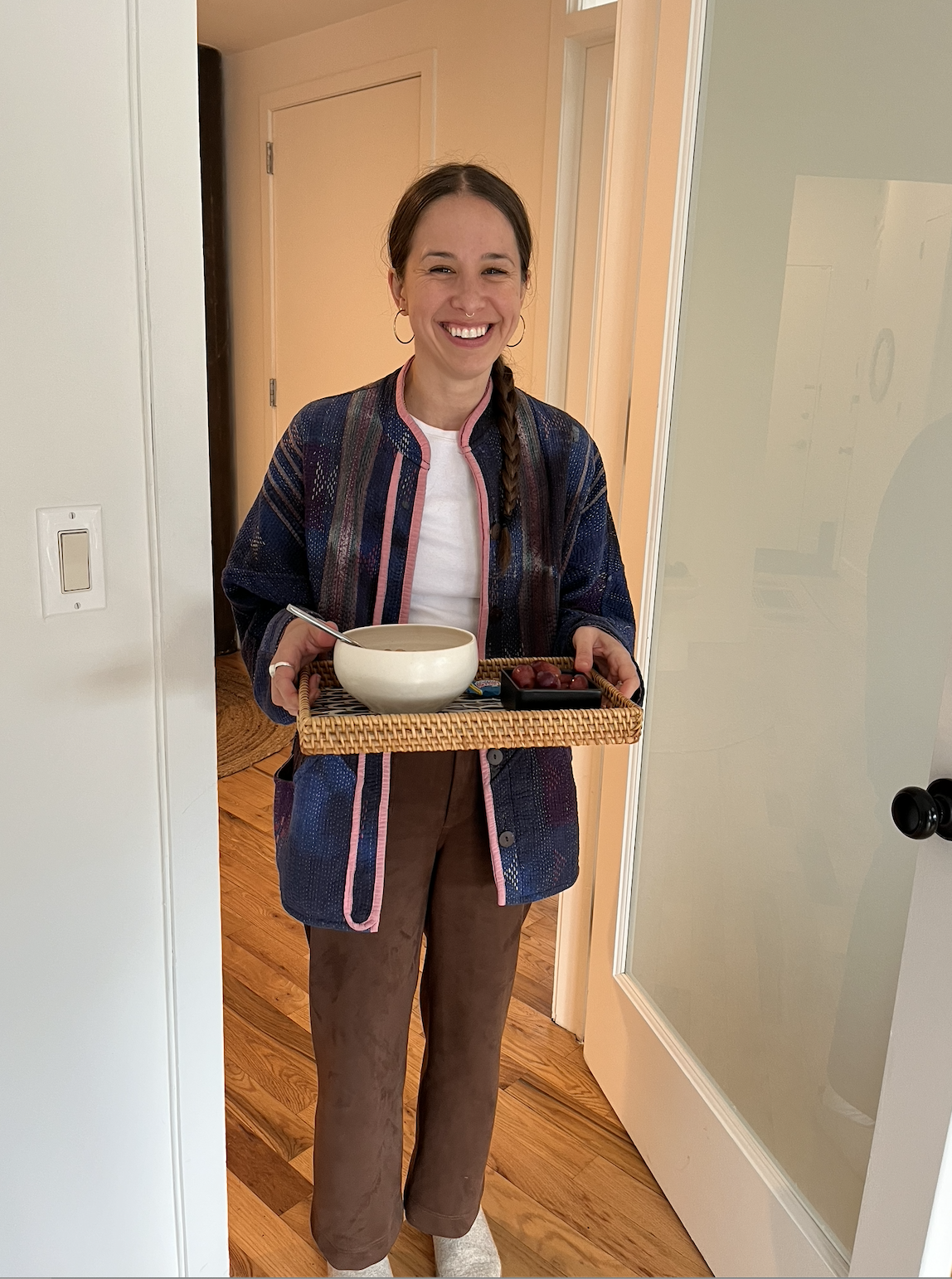
Jenna bringing a KAP client their favorite childhood snack after a ketamine journey
How would you describe the difference in experience between IM (intramuscular) ketamine and sublingual ketamine (oral)?
Jenna: With IM ketamine, you’re able to go a bit deeper; the typical thinking mind and defenses get softened almost immediately. There’s less ability to control or analyze the experience while on the medicine. The peak of IM is much quicker (usually around 12-15 minutes), whereas with sublingual, the peak of the experience is typically around 25-30 minutes.
There’s also an element of receiving with the IM experience. You are literally receiving the medicine from the clinician. There’s less work required to enter into the medicine space—you’re in receiving mode right from the beginning. Alternatively, with sublingual, you have to work a bit (swish the medicine in your mouth for 15-20 minutes) to enter the medicine space and get into receiving mode. Being in a place of surrender from the onset allows us to more readily receive the messages, wisdom, and insight that our higher selves wants to share with us.
There are pros and cons with both!
Do you notice any difference with integration with sublingual versus IM?
Jenna: Because the thinking mind tends to be more intact with sublingual ketamine, meaning-making can happen right away. IM is usually a little less crystalized; it’s often more of a felt sense or an overriding emotion versus a clear message or download. It can sometimes be hard to put into words.
For IM, the integration looks like sitting with the unknown. The practice is letting the unfolding happen over the next couple of days or weeks. Sitting with the uncertainty or felt sense, being with the imagery that comes.
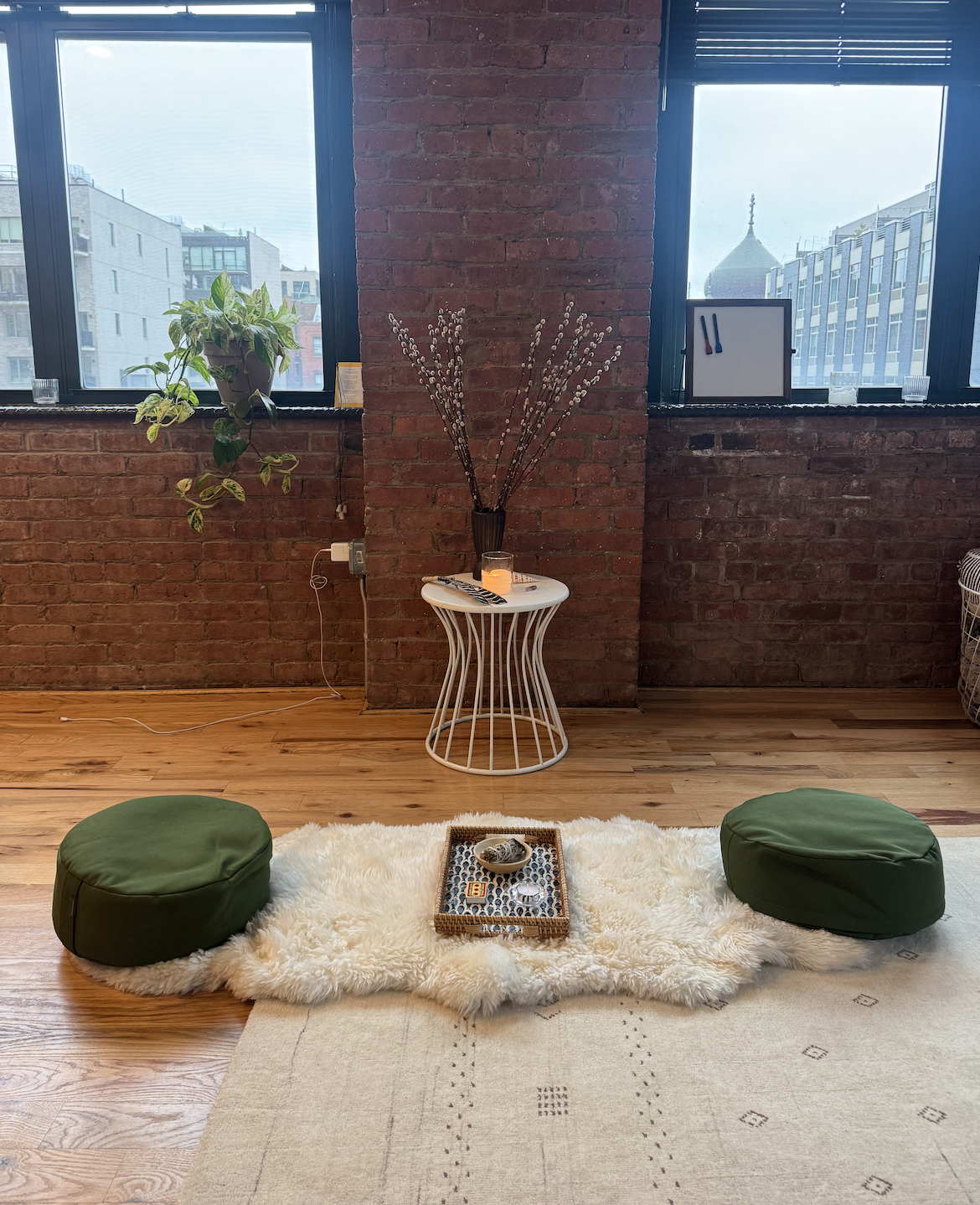
Jenna's set up in the space for the start of an individual KAP session
What do you see being different about a group experience versus an individual KAP experience?
Jenna: My individual KAP clients often say to me they wish they could talk to people about their ketamine treatment! Sometimes the experience is so ineffable and so hard to put into words that it can leave them feeling disconnected from others. There’s something about connecting with people who are doing similar inner work and who also have these ungraspable inner experiences that can be healing.
Being seen and witnessed in our stories by others is incredibly healing in itself! Having a shared experience of awe and wonder with a group of people who are doing similar inner work helps us feel less alone. We’re meant to be healed in community, not in isolation.
When thinking about groups, I also think of the bell hooks quote, “Rarely, if ever, are any of us healed in isolation. Healing is an act of communion.”
One theme that emerged throughout this conversation was surrender. While ketamine can create profound shifts in perspective, the medicine also invites us into something much simpler: loosening our grip on control by learning to trust what unfolds.
Whether experienced individually or in a group setting, ketamine therapy can create space for insight, connection, and healing that feels difficult to access through talk therapy alone.
Interested in experiencing ketamine therapy in community with other therapists?
If you're a therapist in New York City curious about ketamine-assisted psychotherapy, we'd love to have you join us for our upcoming therapist KAP group on August 7th. The experience includes preparation, a professionally facilitated ketamine journey, and integration support to help you make meaning of the experience. Learn more about the therapist KAP group here.
More notes on ketamine:


Julie Goldberg is a licensed therapist and the founder of Third Nature Therapy. Her practice focuses on helping individuals better understand their inner world, befriend their nervous system (instead of working against it), and navigate changing relationships. She offers somatic therapy, EMDR intensives, and Ketamine-Assisted Psychotherapy in Brooklyn, NY.